
CASE STUDY
What we hear when we listen: 200 hours of real coaching
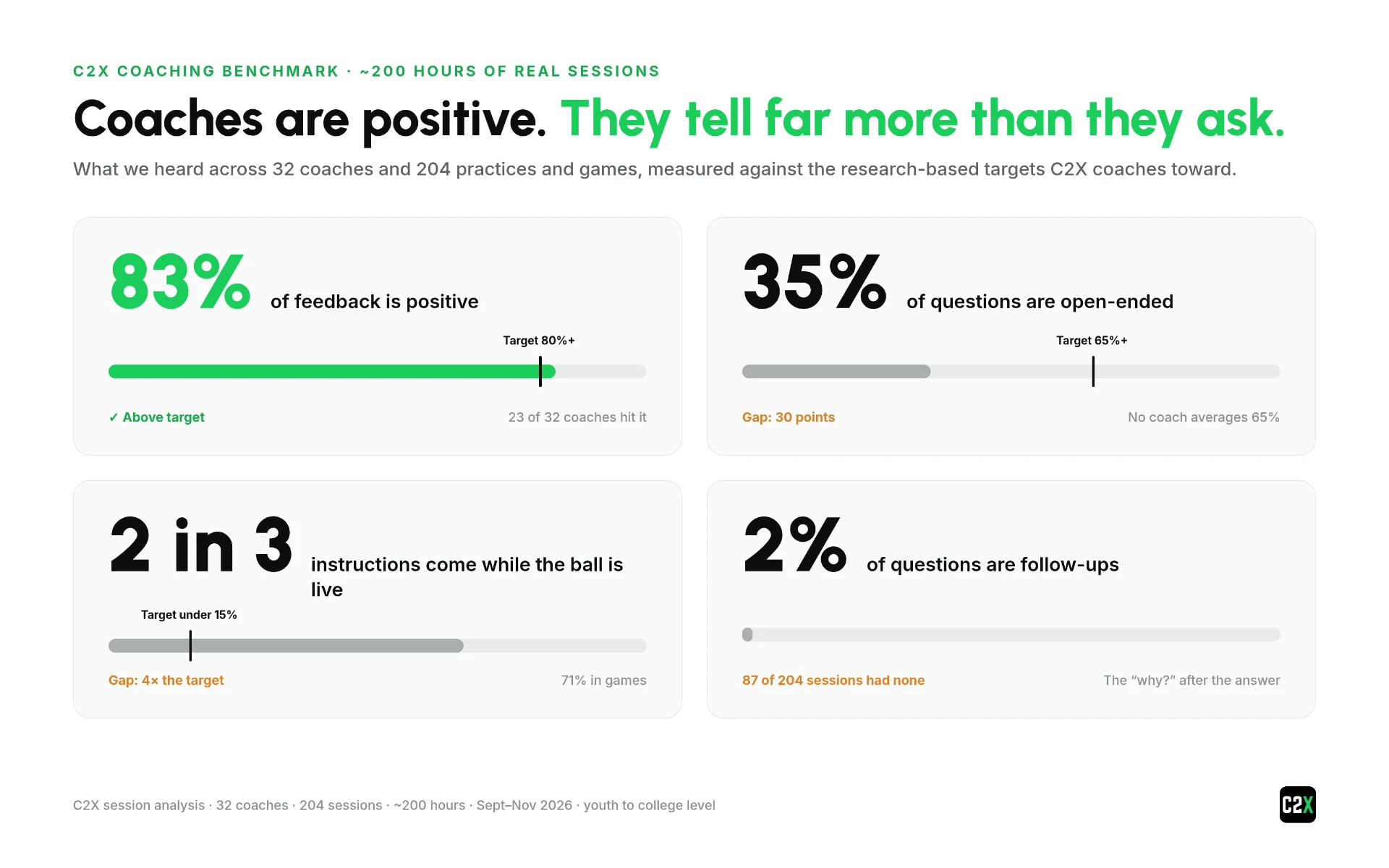
The short version: We analysed about 200 hours of real practices and games from 32 coaches. The good news is that coaches are positive: 83% of their feedback is positive. The gap is in how they teach. Only 35% of their questions are open-ended, 2 of every 3 instructions come while the ball is live, and on game day questions drop by a third.
The question
Research on coaching keeps pointing to the same habits: ask open questions, give players time to think, and teach before and after the rep instead of during it. We wanted to know what coaching actually sounds like when nobody is grading it.
How we looked
Between September and November 2026, 32 coaches recorded 204 sessions with C2X (103 practices and 101 games, from youth clubs to college). That's about 200 hours and 900,000 words of coaching. We measured every session on the same coaching behaviours and compared them with the research-based targets C2X coaches toward.
What we found
- Positivity isn't the problem. 83% of feedback was positive, above the 80% target. 23 of 32 coaches hit it.
- Coaches ask, but mostly closed questions. Only 35% of questions were open-ended, against a target of 65%+. No coach averaged 65%.
- The follow-up is missing. Just 2% of questions were follow-ups (the "why?" after a player answers), and 87 of 204 sessions had none at all.
- Most teaching happens mid-play. 2 of every 3 instructions came while the ball was live. The target is under 15%: players learn more when coaching comes before or after the rep.
Game day changes things
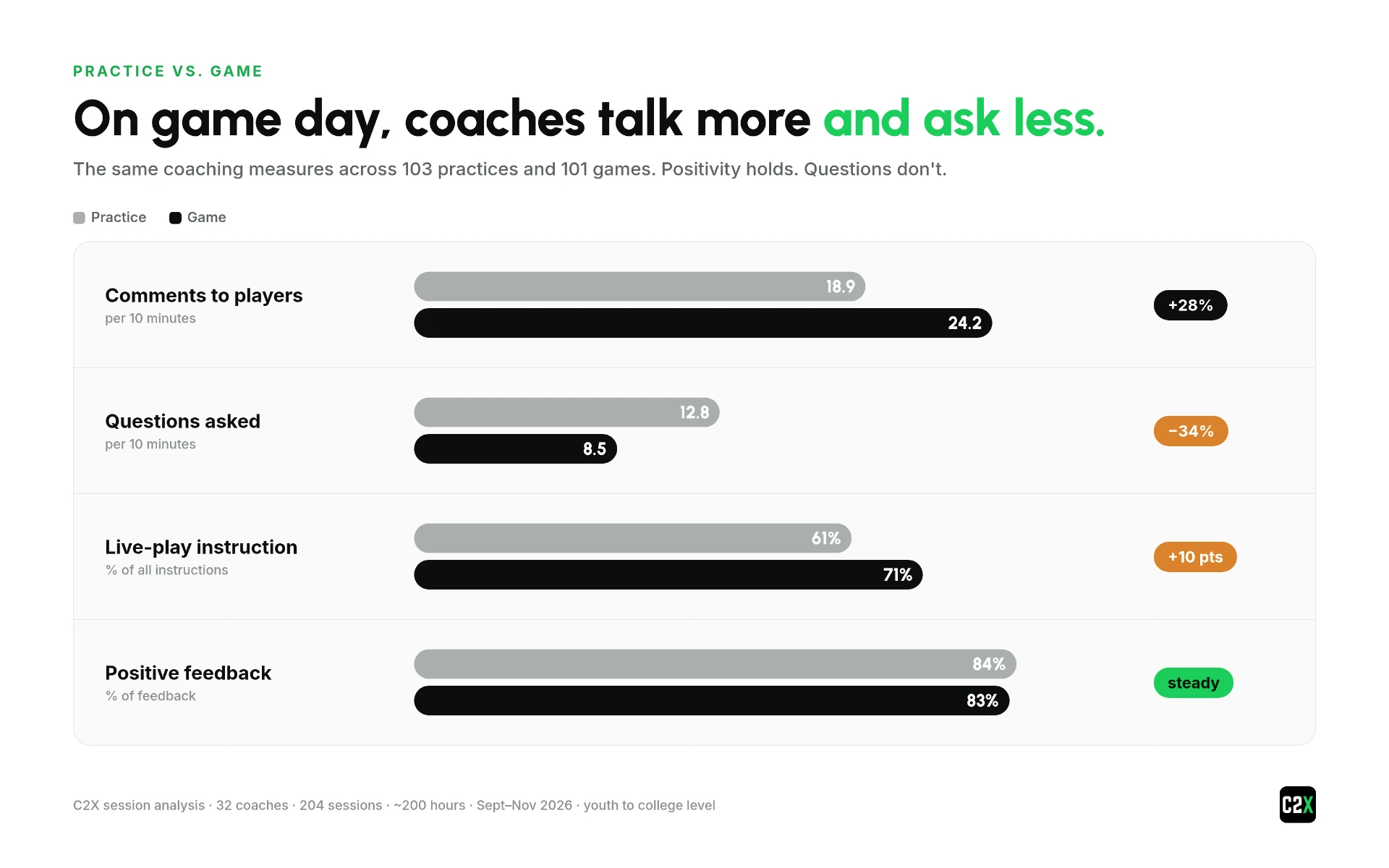
Compared with practice, coaches made 28% more comments in games but asked 34% fewer questions. Live-play instruction rose from 61% to 71%. Positivity held steady (84% vs 83%). Under pressure, coaches don't get more negative. They take over.
Why it matters
None of this is visible from the sideline, including to the coach. Most coaches would say they ask plenty of questions, and most don't. That isn't a character flaw. It's a blind spot, and you can't change what you can't see.
What C2X does about it
After every session, C2X shows the coach these exact numbers: open vs. closed questions, when instruction happens, and how feedback lands. It then gives them a 3-step plan for next time. Directors see the same picture across their whole staff.